Candy Cane Faux Embroidery Alpha Set: A Designer's Review
The First Look That Stops You Mid-Scroll
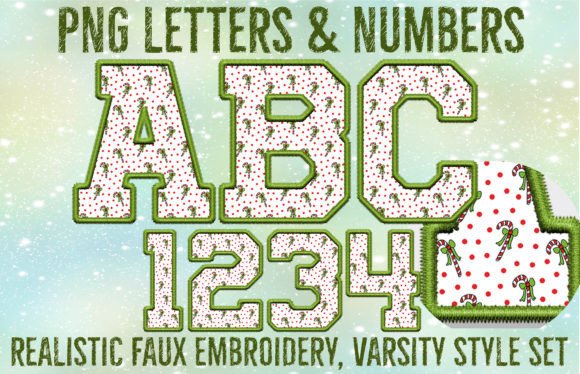
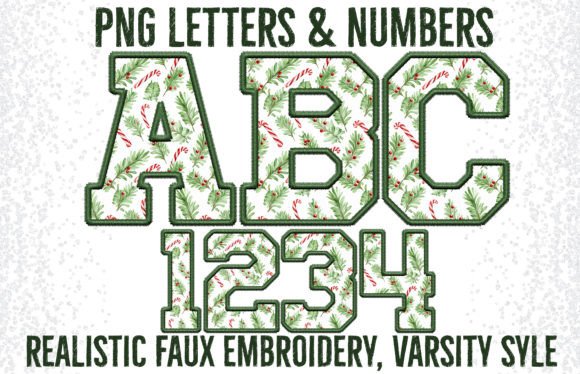
When I first opened the Candy Cane Faux Embroidery Alpha Set, I immediately saw a holiday project coming together in my mind. The characters carry that twisted peppermint stripe rhythm that feels both nostalgic and crisp. There is a lighthearted energy here, the kind that makes you think of winter market booths, matching family pajama sets, and personalized stocking tags. The shape language is rounded and friendly without becoming childish, which is a balance I always look for when sourcing design assets for a craft business. The faux embroidery texture gives the illusion of stitched thread without committing to a physical needle, and that creates interesting possibilities for digital mockups and sublimation planning.
What stood out to me was how the set already feels cohesive. Often with alpha sets you find one letter that looks thinner or a number that sits awkwardly, but here each character maintains the same candy stripe weight and curve. For an Etsy seller or small shop product line, consistency across the alphabet is non-negotiable. A customer ordering a custom name sweatshirt will notice if the letter C feels different from the letter R. This set passes that visual check with confidence.
Where This Set Feels Most at Home
I started mentally placing the Candy Cane Faux Embroidery Alpha Set into real-life scenarios almost immediately. The first image was a cream-colored tote bag design with a single bold initial in the center, maybe an S or a J, surrounded by a subtle snowflake scatter. The red and white stripe reads clearly against natural linen and canvas textures, which is important when you plan to sell at a craft fair where lighting is unpredictable and customers make split-second decisions.
Then I thought about baby embroidery—a soft knit onesie with a tiny candy cane monogram on the chest. The rounded letterforms feel gentle and safe for infant apparel, and the theme steers clear of anything too sharp or angular. For holiday embroidery, this set also works beautifully on pillow covers and kitchen towels. I can see a full “HOME” layout across four coordinating tea towels, each letter acting as its own decorative accent while still reading as a complete word.
For custom apparel like sweatshirt embroidery, the faux stitch style adds texture that mimics real thread work. If you are using these PNG files for printable mockup displays or sublimation, the illusion holds up well on flat previews. A mockup of a crimson hoodie with a white candy cane initial across the chest would catch the eye in any Etsy listing thumbnail.
When PNG Files Change Your Workflow
Let me address the format directly because this matters for anyone planning to use the Candy Cane Faux Embroidery Alpha Set in a production workflow. These are finished PNG files, not an SVG, and they are not intended for editing. For some designers, that is a limitation. For others, it is a time-saver. You receive 42 characters including A through Z, numbers 0 through 9, and a few punctuation extras like apostrophe, comma, and dash. The files arrive ready to use, which means you drop them into your design software, size them, and move on.
If you are a digital product seller creating custom name graphics or design assets for other crafters, the no-edit nature of PNGs means you need to be comfortable working within the given style. You cannot recolor the stripes or change the stitch direction. But for sublimation projects, the sharpness of the faux embroidery texture transfers beautifully onto mugs, ornaments, and apparel panels. I have tested similar faux stitch PNGs on poly-coated blanks, and the detail holds up when the heat press settings are dialed in correctly.
One thing to note for machine embroidery design use: these are not digitized embroidery files. You cannot load a PNG directly into an embroidery machine. If you want to stitch this design physically, you will need to digitize it yourself or hire a digitizer, and you must check whether the original seller permits derivative embroidery file creation. Always confirm licensing before using digital embroidery file assets in a commercial stitching project.
Testing the Design Across Fabrics and Products
When I evaluate any alpha set for embroidery project use, I think about fabric behavior. The candy cane stripe pattern relies on clean red and white contrast. On light fabrics like white cotton or natural linen, the design reads clearly. On dark fabrics, the white highlights pop but the red can lose depth if the thread colors are not chosen carefully. If you plan to stitch this design physically, I recommend testing a single letter on a navy or charcoal swatch before committing to a full finished product. The stripe rhythm needs both tones to feel balanced, and dark backgrounds can swallow the red unless you adjust stitch density or add a thin outline.
Textured fabrics also deserve attention. A waffle weave kitchen towel or a chunky knit scarf can distort fine stripe details. The Candy Cane Faux Embroidery Alpha Set has a moderate level of detail—not overly intricate, but enough that a loose weave might blur the stripe edges. I would lean toward smoother fabric bases like cotton sateen, polyester poplin, or jersey with a stabilizer backing. For embroidered patch applications, the design works well on twill or felt backgrounds where the flat surface preserves the stripe clarity.
Size is another practical consideration. Small lettering, especially on caps or curved surfaces, can lose the stripe definition. If you scale these characters down below two inches, the red and white bands may blend together visually. I reserve the smaller sizes for simple initials on baby clothes and use the larger scales for tote bag design statements or pillow cover centerpieces. Always check your hoop size and make sure the design fits comfortably without pushing into the edges where stitch registration becomes less reliable.
How Customers Perceive Faux Embroidery Style
In my experience selling handmade product lines, the faux embroidery look triggers a specific emotional response. People associate visible stitch texture with care, craft, and slow-made quality. Even when the product is created through sublimation or digital printing, the illusion of thread creates a sense of warmth. The Candy Cane Faux Embroidery Alpha Set leans into this perception. A personalized gift featuring these characters feels more thoughtful than a flat printed font, and customers often pause longer on listings that mimic stitched details.
For small business merchandise, this set can elevate boutique branding without requiring actual embroidery equipment. A holiday ornament with a single candy cane initial, a set of matching gift tags, or a seasonal printable mockup for a product preview all benefit from the handcrafted illusion. The key is consistency. If you use this alpha set across multiple products, your brand starts to build a recognizable visual language. Repeat customers will associate the candy cane stripe with your shop, which strengthens customer trust and brand consistency.
Giftability also increases. I have noticed that buyers gravitate toward monogrammed items during the holiday season because they feel more personal than generic designs. A custom embroidered apron with a candy cane initial, a patch on a winter hat, or a baby embroidery bib with a sweet single letter all carry that extra layer of intention. The Candy Cane Faux Embroidery Alpha Set gives you the visual language to create those products without designing each letter from scratch.
Practical Notes for Embroidery Designers and Makers
Before you commit to using this set in a client project or product line, I recommend a few practical steps. First, test the design on scrap fabric. If you are digitizing the letters for machine embroidery design stitching, run a single character and check the stitch density. The red and white stripes need clean separation, and dense satin stitch sections can cause puckering on lightweight fabrics. Adjust fill stitch angles and running stitch underlay to keep the stripes crisp without overworking the base material.
Second, review thread color contrast. The digital PNG shows a bright red and pure white, but physical thread colors vary. Hold spools next to each other under natural light and make sure the red is not too dark or too orange. The candy cane effect depends on that classic peppermint red, and a muddy tone will weaken the stitching clarity and visual appeal.
Third, confirm your hoop size and placement. Letters with descenders like lowercase g or y are not in this set since it is uppercase only, but wide characters like M and W need more horizontal space. Plan your layout so the design sits comfortably without crowding the hoop edges. For curved surfaces like caps or hats, test the center placement and consider whether the stripe pattern will distort on the arc.
Fourth, check the licensing terms. The product description mentions these PNG characters can be used for sublimation, but you still need to verify whether the seller allows commercial embroidery use, resale on physical products, or inclusion in digital embroidery file bundles. Do not assume anything. Reach out to the seller if the terms are unclear, especially if you plan to sell finished items on Etsy or at markets.
Finally, test the design in black and white mockups. This is a step I never skip. A monochrome preview reveals whether the design still reads as a clear letter when the festive color is removed. If the shape relies too heavily on the stripe pattern for legibility, the character may look muddy on a single-color product variation. The Candy Cane Faux Embroidery Alpha Set holds up reasonably well in grayscale because the letterforms are distinct, but the peppermint personality does fade. Keep that in mind if you offer multiple color options in your product line.
Where I Would Use This Set, and Where I Would Pause
For holiday gifts, craft business inventory, and Etsy seller product photography, this set is a strong addition to your seasonal toolkit. I would use it confidently on tote bags, pillow covers, kitchen towels, aprons, sweatshirt embroidery mockups, baby clothes, and nursery decor. The candy cane theme naturally limits the design to late fall and winter, but that focused window can be an advantage for holiday marketing. Shoppers looking for festive personalized gift options will actively search for candy cane motifs, and a well-executed embroidered patch or monogrammed item using this set can stand out in a crowded category.
I would pause before using it on thin fabric or stretchy fabric without proper testing. The stripe detail requires a stable surface, and a flimsy material can cause the stitches to shift or the sublimation to blur. I would also avoid very small sizes on curved surfaces where the stripe pattern might warp. For dark fabric projects, I would run a test sample first and possibly add a light underlay or outline to keep the red from receding.
The fact that these are finished PNG files and not editable vectors means you need to accept the design as it is. For me, the time saved by not having to build each letter from scratch outweighs the lack of editability. The set is cohesive, the mood is unmistakably festive, and the faux embroidery texture adds value that flat alphabets simply cannot match. When I think about the finished product sitting on a craft fair table or appearing in a customer's Instagram unboxing, I see the Candy Cane Faux Embroidery Alpha Set delivering exactly what it promises: a sweet, stitched-looking holiday alphabet that feels handmade and professional at the same time.