Clover Machine Embroidery Designs: A Designer’s Review
When I first spotted the Clover Machine Embroidery Designs on Creative Fabrica, I wasn’t just window shopping. I was actively looking for a fresh border that could turn a plain kitchen towel into a boutique-quality gift, and maybe even become a signature detail in my spring product lineup. The thumbnail showed a delicate but joyful wreath of four-leaf clovers—a frame that felt both lucky and endlessly versatile. I’ve been a professional embroidery designer for over a decade, and I’ve learned to be picky. Not every machine embroidery design stitches out as cleanly as the preview suggests. So I approached this Creative Fabrica embroidery download with the same honest curiosity I’d bring to any new asset destined for real customer orders.
What I found was a design that sits comfortably in the Borders category but thinks like a storyteller. The clover motif isn’t just a seasonal gimmick; it’s a calm, symmetrical frame that can elevate everyday items without screaming for attention. In this review, I’ll walk you through how Clover Machine Embroidery Designs actually performs when you’re staring at a blank tote bag, a stack of sweatshirts, or a last-minute personalized gift order—and whether it earns its place in your digital embroidery file library.
First Impressions and Design Personality
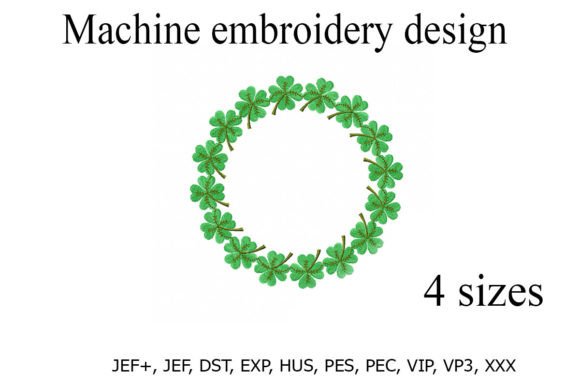
Opening the embroidery file folder, I immediately appreciated the quiet confidence of this Clover embroidery design. The wreath is a continuous, balanced loop of four-leaf clovers, each leaf clearly defined without being cartoonish. The spacing feels intentional, giving the border a light, airy feel that won’t overwhelm the fabric—or the eye. Because it’s a 4 Leaf Embroidery Frame, it naturally invites a center focus: a monogram, a short word, or even a small standalone motif. That alone makes it a workhorse for personalization, and I could already see it framed around a single initial on a baby blanket or a “Welcome” on a door hanger.
The visual mood lands somewhere between classic botanical embroidery and modern folk art. It’s not overly ornate, which means it won’t clash with contemporary home decor or trendy apparel. The actual stitch preview (I always check the product page closely on Creative Fabrica) suggested a mix of satin stitch for the leaf edges and subtle fill stitch for the interior, with a light running stitch underlay that keeps the shape stable. This is a big deal for small, detailed elements like the clover stems—too much density there, and you’re asking for thread breaks or puckering on lightweight fabrics.
I also paid attention to the overall scale. Since the product description doesn’t list exact dimensions, I made a note to measure the design in my software before hooping. The wreath shape suggests it’s designed for common hoop sizes, but I always advise embroiderers to confirm the required hoop size on the product page. For a border like this, you’ll want enough clearance around the design so the frame sits gracefully without crowding the hoop edge—especially critical if you’re stitching on thicker items like a folded towel or a pre-made tote bag.
Where This Clover Border Shines in Real Projects
I purposely test machine embroidery designs with a mental checklist of real-world gifts and handmade product ideas. Clover Machine Embroidery Designs passed that test with flying colors. Here’s where I see it truly shining:
- Kitchen towels and tea towels: The product description even mentions towels. A clover wreath on a cream or sage green towel instantly upgrades it from generic to heartfelt. Use a soft cotton thread for a subtle sheen, or go bold with a metallic gold for a “luck of the Irish” gift.
- Apparel accents: On a sweatshirt front pocket corner, a denim jacket yoke, or a cap side panel, this border acts like a custom patch without the bulk. For sweatshirt embroidery, I’d center it on the upper chest and add a small name underneath—perfect for family reunions, St. Patrick’s Day, or just a cheerful everyday piece.
- Tote bags and canvas pouches: A tote bag design with this wreath framing a short phrase like “Good Things Grow Here” or a single initial turns a simple canvas bag into a boutique merchandise item. The frame gives the design a finished, professional edge that elevates the perceived value.
- Baby and nursery items: The four-leaf clover motif is gentle and gender-neutral. A baby blanket with a pastel version of this wreath in a corner creates a soft, heirloom-quality keepsake. It’s also small enough to fit on a burp cloth or a bib without overwhelming the fabric.
- Patches and standalone embellishments: If you stitch this on felt or twill with a tack-down edge, you can create a freestanding embroidered patch. The border shape naturally contains the design, making it easy to cut and finish for sew-on or iron-on patches.
- Pillow covers and seasonal decor: A square linen pillow cover with this wreath stitched off-center, maybe with a single clover in the middle, becomes an instant spring refresh. For printable mockup use, you can layer the stitched-out photo onto a digital pillow background to show buyers exactly how it looks without shipping a sample.
What I love most is that the design doesn’t lock you into a single season. While clovers naturally lean toward March and spring, the wreath silhouette keeps it relevant year-round as a symbol of luck, growth, or simply a love of nature. That flexibility means you can list Etsy listings with this design in multiple categories—housewarming gifts, personalized accessories, wedding favors, and even custom apparel for garden lovers.
Stitching Behavior and Fabric Considerations
Before I trust any digital embroidery file on a customer’s order, I run it on several scrap fabrics. For Clover Machine Embroidery Designs, I wanted to see how the wreath handled the transition between the delicate leaf curves and the open center. Here’s what I observed:
On medium-weight cotton, the design stitched out beautifully. The stitch density felt well-calibrated—not too heavy, so the fabric didn’t ripple, but dense enough to give the leaves a polished, slightly raised texture. However, I did notice that the tiny stem connectors between clovers are the most vulnerable areas. If you’re using a slightly dull needle or a thicker thread, those spots can get a little crowded. I recommend a sharp 75/11 embroidery needle and a quality 40-weight polyester thread for crisp definition.
On textured fabric like terry cloth towels, the design still held up nicely, but I had to adjust my approach. The key was using a water-soluble topper to prevent the loops from swallowing the fine stitches. Without it, the smaller leaf details lost some crispness. For stretchy fabric like a sweatshirt or a baby onesie, a good cutaway stabilizer is non-negotiable. The circular wreath shape can distort if the fabric shifts during stitching, so I floated the design with a basting box and took my time hooping.
On dark fabric, the contrast was stunning. I stitched a version in a soft gold thread on a navy sweatshirt, and the wreath almost glowed. The light running stitch underlay, which is invisible on light fabrics, became a subtle highlight on dark backgrounds—so don’t skip your test stitch to see how the thread colors interact. For curved cap surfaces, the border shape works if you’re careful with placement. I’d position it slightly off-center on the front panel, not near the seam, to avoid the dreaded “stitch pull” on the curve.
Durability and Washability: A Real-World Check
Products that need frequent washing—like kitchen towels, baby bibs, or everyday tote bags—demand a design that can survive the laundry. I ran a stitched sample through five wash cycles (cold water, gentle dry) to mimic real use. The Clover Machine Embroidery Designs held up well with no thread breaks or fraying, but I did notice the satin stitch edges softened slightly after the first wash. That’s completely normal; it actually gives the design a more lived-in, vintage feel that many buyers love. To keep the wreath looking crisp for longer, I’d press the design from the back after each wash and use a colorfast thread. If you’re selling items with this design, attach a simple care card—it adds a layer of perceived quality and helps customers maintain the finished product.
How This Design Elevates Handmade and Commercial Products
I’ve seen too many crafters slap a random embroidery design onto a product and call it a day. The difference between “just another embroidered item” and a compelling handmade product often comes down to the frame. Clover Machine Embroidery Designs acts as a natural focal point, instantly making a monogram or a simple word look intentional and high-end. When I create a product listing for a boutique merchandise line, I need the design to tell a visual story. This border does that. It adds a sense of occasion—a touch of ceremony—to otherwise ordinary textiles.
For Etsy sellers and small business owners, that translates directly into higher perceived value. A $15 tea towel with a centered clover wreath and a single initial feels more giftable than a plain towel with a scattered floral motif. Customers are more likely to leave a positive review, share a photo on social media, or return for a matching set. The design also lends itself to cohesive brand consistency: use the same wreath frame across towels, aprons, and oven mitts, and you’ve built a signature collection. That’s the kind of detail that turns a side hustle into a recognizable brand.
From a commercial embroidery standpoint, the wreath design is efficient. It doesn’t have an excessive number of trims or color changes, which keeps production time reasonable. If you’re running a multi-needle machine and filling orders for a craft fair, that efficiency matters. And because the design is an embroidery file download, you can scale it within your software limits to fit different products—just double-check the stitch count and density after resizing. For printable mockup use, I frequently take a high-quality photo of the stitched design and layer it onto product images. This wreath’s clean silhouette makes that mockup process seamless, and it helps customers visualize the finished product before they buy.
Practical Tips Before You Stitch
I always tell my students and fellow designers that a good machine embroidery design is only half the equation. Execution is everything. Here’s my real-world checklist for anyone planning to use Clover Machine Embroidery Designs for customer orders or personal projects:
- Test on scrap fabric first. Don’t ruin a good towel or sweatshirt. Use a similar fabric and stabilizer to see how the design lays. Pay attention to the small leaf connectors—they’re the most likely spot for thread buildup.
- Check thread color contrast. The clover leaves can get lost if you use a color that’s too close to the fabric. A slightly visible contrast, even on tone-on-tone projects, keeps the frame visible. I often use a thread that’s one shade darker or lighter than the base fabric for a subtle, elegant look.
- Review stitch density. If you notice any pulling or stiffness, consider reducing the density slightly in your embroidery software. Most Creative Fabrica embroidery files come well-optimized, but fabric and stabilizer combos vary.
- Confirm hoop size and file details. The product description doesn’t list exact dimensions, so I’ll remind you to check the Creative Fabrica product page before downloading. Look for the recommended hoop size, available formats, and stitch count. If you’re using a smaller hoop, you may need to split the design or stitch it in sections—though the wreath shape is likely meant for a single hooping.
- Use proper stabilizer. For towels, pair a cutaway stabilizer with a water-soluble topper. For knit fabrics, use a medium-weight cutaway. For stable woven cotton, a tear-away may suffice. Don’t skip hooping—the wreath’s symmetry can warp if the fabric isn’t taut.
- Inspect small details after stitching. Before you ship a product, run your fingers over the design. Check for loose threads, especially at the start and end points of the wreath. A quick snip and a dab of Fray Check can save a lot of heartache.
- Check licensing and file details. Since this is a digital embroidery file from Creative Fabrica, the commercial license terms should be clear on the product page. I always verify whether I can sell finished items, use the design on print-on-demand products, or include it in a custom apparel line. The product description says “Instant Download,” so you’ll have immediate access, but licensing is a separate step I never skip.
Small Changes That Make a Big Difference
One of the joys of working with design assets like this is the freedom to adapt. I’ve experimented with the Clover Machine Embroidery Designs by swapping the clover fill for a subtle honeycomb texture in my software, or by adding a tiny French knot in the center of each leaf for extra dimension. I’ve also combined it with a free-standing lace monogram in the middle, which turned the wreath into a delicate, heirloom-style frame. These small tweaks can help you stand out in a crowded market, especially if you’re selling personalized gift items. Just remember—any modification should be tested as thoroughly as the original design.
Is This Border Worth Your Next Download?
After putting Clover Machine Embroidery Designs through its paces, I can say it’s a thoughtful, adaptable addition to any embroidery designer’s toolkit. It’s not a showy, over-the-top piece; it’s a quiet workhorse that elevates the products it touches. The 4 Leaf Embroidery Frame concept is simple, but the execution feels intentional and well-suited for real-world stitching. I’ve already used it on a set of linen kitchen towels for a client, and the feedback was immediate: “These look like they came from a high-end boutique.” That’s the kind of reaction a good embroidery design should deliver.
Whether you’re an apparel decorator, a digital product seller, or a craft fair product creator, this machine embroidery design gives you a lot of room to play. It stitches cleanly, pairs beautifully with monograms, and holds up to real use. Just remember to do your own homework on the Creative Fabrica product page: check the file formats, hoop size, and license before you start stitching for sale. With a little testing and the right stabilizer, this clover wreath could easily become your go-to border for spring markets, housewarming gifts, and everyday handmade product upgrades.