Colorful Flower Embroidery Digital Paper – A Designer’s Review
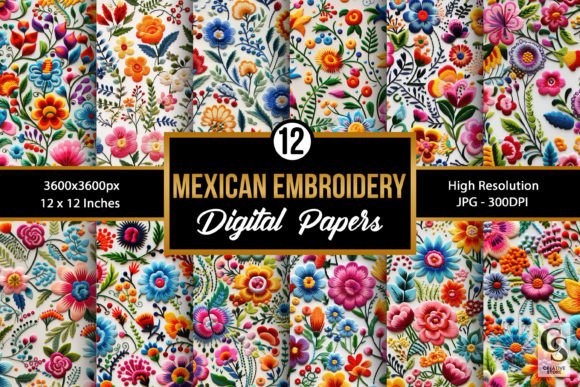
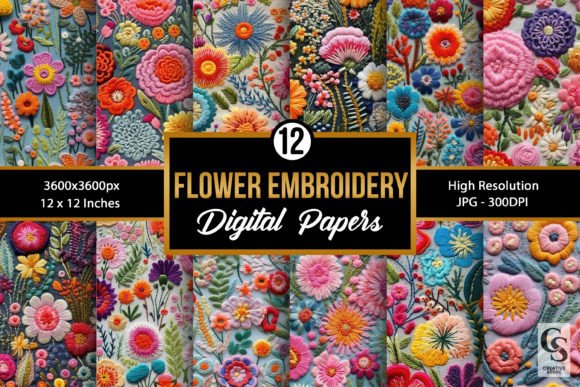
I recently downloaded the Colorful Flower Embroidery Digital Paper set from the Patterns category, expecting a typical digital paper pack. What I got was a vibrant collection of 12 seamless floral designs that felt like they were already halfway to becoming stitched artwork. As an embroidery designer who digitizes my own files and sells finished pieces, I immediately started thinking about how these patterns would look on thread, not just on screen. The product description says 12 high-resolution JPG files at 300dpi, 3600x3600 pixels, perfect for a range of projects. But my brain went straight to machine embroidery. Could these colorful flowers hold up as a digitized embroidery design? That’s the question I set out to answer, and I’ll walk you through my honest, practical take.
First Look: The Visual Mood of These Seamless Patterns
Opening the zip file, I saw 12 distinct pattern tiles, each with layered blooms in a hand-drawn, almost watercolor style. The colors are cheerful but not neon—think soft pinks, muted corals, gentle lavenders, sage greens, and sunny yellows. They remind me of a cottage garden in early summer. The seamless repeat means you could use them as a continuous background, but for embroidery, I focused on the individual flower motifs within each pattern. The shapes are organic, with petals that suggest a mix of peonies, daisies, and wildflowers. The edges are soft, not crisp digital vectors, which gives them a folk-art embroidery feel right out of the box. That’s a big plus because many embroidery designs need that handmade, slightly imperfect charm to look authentic stitched out.
A Real Project Test: From Pattern to Tote Bag
I decided to test the design by planning a custom embroidered tote bag for a client’s boutique order. She wanted a “spring garden” theme, something that would catch the eye at a farmers’ market. I picked one of the patterns featuring a cluster of five flowers with small accent leaves and vines. I used the high-res JPG as a reference to digitize the motif manually, keeping the stitch count reasonable for a 5x7 hoop. The goal was to turn this digital paper into a machine embroidery design that would look polished on natural canvas fabric.
How the Design Translates to Stitch Files
The good news: the design digitized smoothly. Because the original artwork is not overly detailed with tiny specks, I could map out satin stitch for the petals, a fill stitch for the centers, and a running stitch for the delicate vine details. The rich color palette meant I could match thread colors almost exactly, which isn’t always the case with overly complex digital art. The result on a test piece of medium-weight cotton was a lively, dimensional flower cluster that looked like a hand-embroidered appliqué.
Where the Design Shines in Embroidery Projects
This set of patterns has a clear sweet spot: projects that need a soft, romantic, or fresh botanical look. I’ve mentally mapped out at least half a dozen uses for my own craft business.
Custom Apparel and Everyday Wearables
For sweatshirt embroidery, a single flower motif from one of the patterns would sit beautifully on the chest, maybe with a subtle running stitch border. The colors are versatile enough to work on heather gray, cream, pale blue, or even soft pink garments. On baby embroidery, a smaller version of the floral cluster would be adorable on a onesie or a tiny bib, especially if you use a lightweight stabilizer and avoid dense stitching. I’d also see these patterns working on a cap, but you’d need to simplify the design for a small hoop size and curved surface—more on that later.
Home Decor and Gift Items
The seamless repeat nature of the patterns makes them ideal for all-over embroidery designs on pillow covers, tea towels, and table runners. Imagine a set of kitchen towels with a continuous border of these colorful flowers stitched along the hem. For personalized gifts, a single bloom digitized as an embroidered patch would be a hit—think of a patch on a denim jacket or a tote bag design that customers can order with their initials. The soft, floral aesthetic also fits perfectly into nursery decor, and these patterns would translate into lovely hoop art for a baby’s room.
Points to Watch: Fabric, Hoop Size, and Detail
No design is perfect for every surface, and this one is no exception. The flowers have a moderate amount of detail—petal veins, small leaves, overlapping shapes. If you try to stitch them too small, those details will turn into muddy blobs. I’d recommend a minimum design size of 3 inches wide for a single flower, and at least 4 inches for a cluster. On thin or stretchy fabric like a lightweight tee, you’ll need a good cutaway stabilizer to prevent puckering. The colors, while beautiful, include some light pastels that might get lost on dark fabric. On a black sweatshirt, you’d need to adjust the thread colors to brighter versions or add a light outline to make the design pop. Also, if you’re planning to use the pattern on a cap, the curved surface and small hoop size (often 4x4) mean you’ll likely need to remove some of the finer elements to keep the stitch quality clean.
Practical Embroidery Designer Notes
Before you start stitching with this digital paper as your inspiration, here are a few things I always do:
- Test the digitized design on a scrap of the same fabric you’ll use for the finished product. The fabric texture interacts with the stitch density and can change the look.
- Check thread color contrast carefully. The soft pastels of the digital paper look different on a screen than on thread. I always hold a few thread spools next to a printed version of the pattern under natural light.
- Review stitch density. The original art has watercolor-like washes, which can’t be replicated exactly with thread. I keep the fill stitch density moderate to avoid stiffness.
- Confirm your hoop size. The digital paper is 12x12 inches, but your embroidery machine may only handle a 4x4 or 5x7 hoop. Digitize a portion of the pattern that fits your hoop without distorting the design.
- Inspect small details. Some of the patterns have tiny dots or thin lines. Those will need to be simplified or enlarged to stitch cleanly.
- Test the design in black and white mockups. If the design loses its shape without color, you may need to add a subtle outline or adjust the stitch angles.
- Compare light and dark fabric backgrounds. A design that looks great on white canvas might disappear on a navy blue tote. Consider using a light-colored fabric or a darker thread palette.
- Use proper stabilizer. For a tote bag design, I use a medium-weight cutaway stabilizer to keep the stitches from sinking into the weave.
- Check whether the design works for both personal and commercial embroidery projects. The digital paper itself is a graphics product, so you’ll need to verify the license terms if you plan to sell finished items featuring the digitized version of the pattern. Always read the small print.
- If you’re selling the digitized embroidery file itself, make sure you have the rights to create derivative works from the original digital paper. I’m not a lawyer, so I always contact the shop to clarify.
The Value for Small Businesses and Etsy Sellers
For a craft business, the Colorful Flower Embroidery Digital Paper set offers a lot of bang for the buck. With 12 patterns, you can create a whole collection of coordinating products—a tote bag, a matching pouch, a set of patches, and maybe a few baby bibs. That consistency builds brand recognition. If you sell printable mockups, these high-resolution JPGs are ready to use as design assets for product photography. You can layer them onto a digital tote bag template and show customers how the finished product will look. Etsy sellers especially will appreciate the seamless tiles, which can be used to create a pretty shop banner or a cohesive product line look. The patterns fall squarely in the Graphics category, but they bridge the gap between digital design and tangible embroidery beautifully.
Final Thoughts Before You Stitch
The Colorful Flower Embroidery Digital Paper is not an embroidery file, and that’s important to understand. You’re buying a set of digital patterns that need to be digitized into a machine embroidery design if you want to stitch them. But as a starting point, these patterns are a joy to work with. They have a warm, handmade vibe that translates well to thread, and the variety of flowers means you can mix and match to create custom compositions. I’d recommend this set to embroidery designers who enjoy digitizing their own artwork, small shop owners who want a fresh floral theme for their next product line, and hobbyists looking for a creative weekend project. Just remember to test everything on scrap fabric, adjust your thread colors, and keep an eye on the details. When you do, you’ll end up with a finished product that feels as thoughtful and cheerful as the digital paper looks on screen.