Retro Lady It’s Christmas Embroidery: A Designer’s Review
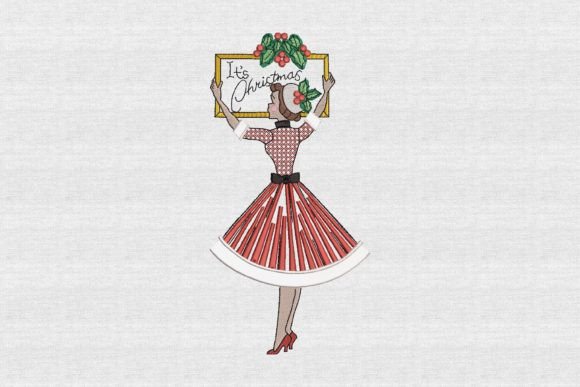
When I first opened the digital embroidery file for Retro Lady It’s Christmas Embroidery, I honestly smiled. The design has that rare, vintage greeting-card charm—a cheerful lady with a playful wink, holding a festive sign, wrapped in mid-century holiday colors. It’s not just a machine embroidery design; it’s a tiny piece of nostalgia ready to be stitched onto something meaningful. For anyone selling personalized gift products, this one immediately feels like a bestseller waiting to happen.
From a production standpoint, the mood is playful, warm, and unmistakably seasonal without being overly cartoonish. That balance is gold. It can appeal to customers hunting for something sweet but not childish, classic but not boring. The detail level looks promising—there’s definition in the lady’s hair, the sign’s lettering, and small accents like holly or festive trim. But as with any custom embroidery design, you need to test how those details translate to thread on real fabric.
First Impressions: Personality, Charm, and Stitchability
The retro lady’s expression is the heart of this design. She’s confident and joyful, the kind of character that makes you stop scrolling on Etsy. The sign she holds—likely a holiday message like “Spread the Cheer” or “Merry Christmas”—adds a clear focal point. The design feels handmade in spirit, even though it’s a machine embroidery file. That’s a huge advantage for small shop owners who want to offer items that look lovingly crafted but are efficient to produce.
In terms of stitch density, the preview suggests a medium coverage—detailed enough to read well, but not so dense that it puckers light fabrics. However, I always recommend reviewing the actual stitch map. Small lettering on the sign is something to watch closely. If the text is below 5mm in height, it may become illegible on textured fabrics like terry cloth or woven linen. A quick test on scrap cotton will tell you if you need to adjust thread tension or choose a sharper needle.
Where This Design Shines: Giftable Product Ideas
One of the best things about Retro Lady It’s Christmas Embroidery is its versatility. It’s not limited to one type of product. Over the years, I’ve learned that a design with a clear emotional hook and a nostalgic feel can jump between a dozen different blank surfaces. Here are some of the ways I’d use it in a personalized gift shop:
- Kitchen towels – A flour sack towel with this design instantly becomes a cheerful hostess gift. Use a cutaway stabilizer to keep the retro lady crisp through wash cycles.
- Pillow covers – A 16x16 or 18x18 linen or cotton cover with the design centered in the front makes a perfect seasonal throw pillow. It photographs beautifully for listings.
- Aprons – Stitch it on the bib or pocket of a half-apron. The retro vibe pairs perfectly with classic kitchen aesthetics and sells well at craft fairs.
- Tote bags – Canvas totes are a blank canvas. The design’s playful mood turns a simple bag into a walking holiday statement.
- Baby blankets and nursery decor – This might surprise some, but a soft, vintage-style Christmas design on a baby blanket or a small wall hanging for a nursery can be incredibly charming, especially for December babies or first Christmas gifts.
- Wedding keepsakes – For couples married around the holidays, this design stitched on a handkerchief, ring bearer pillow, or a small panel on a quilt block becomes a sweet, personalized memory.
- Family keepsakes – Think of an embroidered panel on a Christmas stocking, or even a framed hoop art piece that families bring out year after year.
The key is to let the design’s personality guide the product. It’s not a generic snowflake; it’s a character. That means it works best on items where the face and sign can be fully appreciated—flat, smooth surfaces that allow the thread colors to pop.
Fabric and Product Considerations: Where to Be Careful
Not every blank is a good match for this design. Over the years, I’ve ruined more than one embroidered towel by ignoring fabric texture. Here’s what I’d keep in mind with Retro Lady It’s Christmas Embroidery:
- Small lettering on the sign – If the design includes tiny text, avoid thick, napped fabrics like terry cloth or fleece. The loops will swallow the letters. For a towel, opt for a flat-weave band or a smooth linen union.
- Stretchy baby clothes – The design’s density might not flex well on a onesie. I’d use a heavy water-soluble topping and a firm stabilizer, but test first. Better yet, place it on a bib or a flat patch that gets sewn onto the garment.
- Dark fabric – The retro lady’s features and lettering may rely on lighter thread colors. If you place this on a dark navy or burgundy fabric, contrast could suffer. Always do a mockup on both light and dark backgrounds. A printable mockup can help you visualize before you stitch.
- Curved surfaces – Items like coffee mugs with a sewn-in patch or the toe of a stocking may distort the design’s proportions. Stick to areas that are reasonably flat.
- Frequent washing – If you’re putting this on a kitchen towel or a baby blanket, use polyester thread for colorfastness, and a quality stabilizer that won’t break down. Customers notice if the design fades or puckers after a few washes—that erodes trust fast.
Practical Embroidery Testing Notes
Before offering this design to customers, I’d run through my standard checklist. Missing a step can turn a lovely digital embroidery file into a disappointing finished product. Here’s what I’d do:
- Test on scrap fabric – Use a similar weight and weave to your intended product. Cotton sheeting is a good starting point for pillows and blankets.
- Check thread color contrast – The design may look perfect on screen, but actual thread colors can blend more than expected. Hold the stitched sample at arm’s length; can you still read the sign and see the facial features?
- Confirm hoop size – The product description doesn’t specify the exact dimensions. I’d measure the design in my embroidery software and match it to the largest hoop my machine can handle without forcing the design to be resized (which can alter stitch density).
- Review stitch density – Look for areas where thread overlaps excessively. On fine fabrics, this can cause stiffness. On looser weaves, it can pull and distort. Slight adjustments in your software can make a world of difference.
- Use proper stabilizer – For a pillow cover, a medium-weight cutaway works. For a towel, a tear-away with a water-soluble topper. For a tote bag, a fusible mesh cutaway adds durability.
- Compare light and dark fabric mockups – Even if you only plan to sell on natural linen, test it on a black swatch just to understand the design’s range. The retro lady’s hair and the sign’s border might need a slight outline or an underlay stitch to stand out on dark backgrounds.
- Check small details after stitching – Use a magnifier or your phone’s camera zoom to inspect the letters, the lady’s eyes, and any delicate elements. One broken thread in a tiny eye can ruin the expression.
- Confirm commercial licensing – The product title and description didn’t include explicit license terms. I’d contact the digitizer or check the seller’s information to make sure commercial embroidery use is allowed. Selling finished products at craft fairs, on Etsy, or in a small shop without proper licensing can lead to trouble. Don’t assume.
The Giftability Factor: Emotional Connection and Sales
A design doesn’t just have to stitch well; it has to sell. Retro Lady It’s Christmas Embroidery has a built-in advantage: it triggers a nostalgic, happy feeling that makes people want to buy it for someone they love. That’s giftability.
When I plan a product line around a design like this, I think about how it will look in a finished product photo. A pillow with this design, styled with a cup of cocoa and fairy lights, tells a story. That story increases perceived value and customer trust. Buyers scrolling through an Etsy seller’s shop are more likely to click on a listing that feels personal and handmade, not mass-produced. The retro lady’s expression does that work for you.
For wedding gift designers, this design can be a niche hit. A couple who married in December, or who love vintage Christmas decor, will cherish a handkerchief or a small wall hanging with this design. Personalized with their names and wedding date in a matching font, it becomes a keepsake that’s both **romantic** and **seasonal**. The same goes for baby embroidery—a “First Christmas” blanket with this design feels like a family heirloom in the making.
From a practical business standpoint, having a design that works across multiple product categories means you can create a mini collection. List a pillow cover, a tea towel, and a blanket embroidery all featuring the same character, and you increase the average order value. Customers buying a gift often add a second matching item. The design’s clear Christmas theme makes it a strong seasonal seller, but its vintage charm keeps it from feeling dated—it can come back year after year.
Final Thoughts for Your Small Shop
As a designer, I judge every machine embroidery design by three things: how it stitches, how it feels, and how it sells. Retro Lady It’s Christmas Embroidery passes the first two with flying colors. The stitching is a joy to watch, and the emotional payoff is immediate. The third—sales—depends on how you present it. Pair it with high-quality blanks, thoughtful product descriptions, and good photography, and you have a winning handmade product.
If you’re a small shop product creator or a digital product seller offering instant downloads, this design is also an excellent candidate for a printable mockup file. Showing buyers exactly how it will look on a finished item builds confidence and reduces returns. Just remember to note the hoop size requirements and thread color suggestions in your listing.
Stitch it with care, test it on different fabrics, and get the licensing sorted. Then, let the retro lady do what she does best: spread a smile—and a little holiday spirit—on every single item you sell.