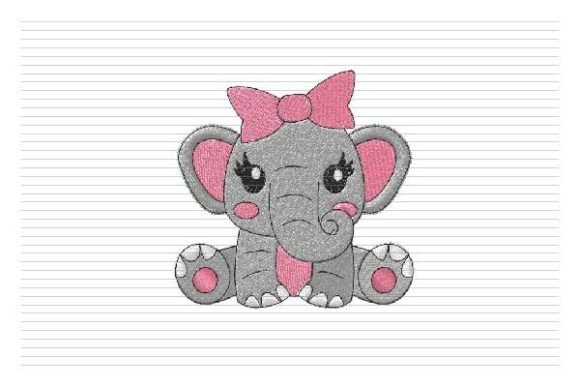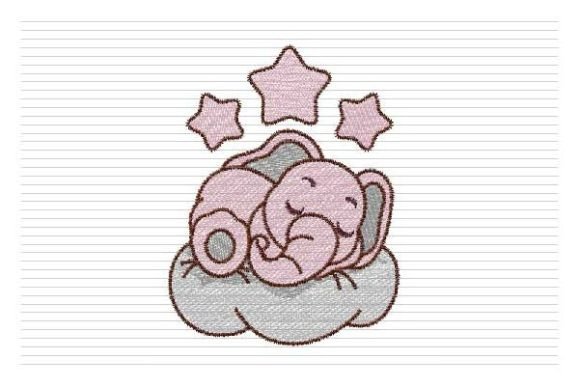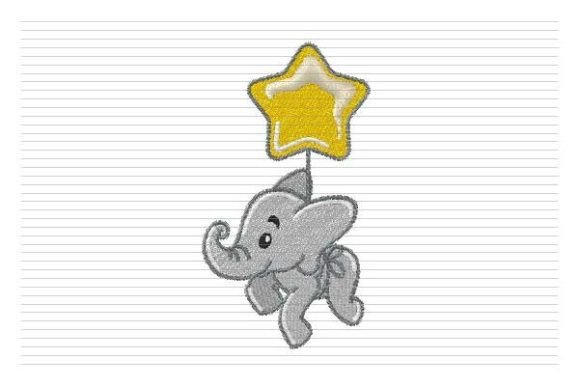
Baby Elephant with Star Embroidery Review
When a small business owner asks me to evaluate a new machine embroidery design for branded merchandise, I don't just look at the visual charm. I examine how it holds up on a cap, whether it reads clearly at patch size, and how it behaves on different fabrics after dozens of washes. The Baby Elephant with Star Embroidery landed on my desk recently, and I want to share an honest, production-focused review for embroidery shops, apparel decorators, handmade brands, Etsy sellers, and anyone building a commercial embroidery lineup around approachable, memory-rich imagery.
Right away, the design triggers something warm and universally appealing. The combination of a baby elephant and a simple star leans into the cuteness and innocence associated with baby animals, which makes it an instant candidate for children's apparel, nursery décor, and gift lines. But my review goes deeper than that. I want to understand whether this design can serve as a recognizable brand asset for a café apron, a boutique tote bag, a florist work shirt, or a custom embroidered patch that customers actually keep.
First Impression and Visual Personality
The Baby Elephant with Star Embroidery presents a friendly, playful, and slightly rustic personality. The rounded shapes and gentle proportions suggest a hand-drawn origin, which translates well into stitched texture. It doesn't feel overly polished or corporate, yet it carries enough structure to read as professional. For a handmade shop, a children's boutique, or a creative studio, this balance between whimsy and craftsmanship is exactly what builds brand identity. Customers recognize the care behind the image, and that recognition drives repeat purchases.
From a composition standpoint, the star element adds a subtle narrative. It transforms a simple animal silhouette into a small story, which is valuable for product labels, packaging accents, and customer gifts. I could picture this design on a kraft paper hangtag, stitched in a single neutral thread color, creating a cohesive look across an entire product line. The emotional tone is gentle, not loud, making it suitable for brands that want to communicate warmth rather than aggression.
Embroidered Patch Potential
One of the first applications I mentally test is the embroidered patch. A baby elephant with a star makes a charming patch shape, especially with a clean merrowed edge or a raw-edge finish for a more modern look. Small businesses selling at markets, pop-ups, or online can use this patch on denim jackets, canvas pouches, and beanie hats. The key question is whether the design simplifies enough at small patch sizes. Details like tiny trunk curves or star points can close up under high stitch density, so I recommend testing the Baby Elephant with Star Embroidery at the intended patch dimensions before committing to a bulk order. Always check the stitch density and spacing, especially around the eye and the star interior.
Branded Apparel and Uniforms
For staff uniforms, aprons, and work shirts, the design works best as a chest logo accent or sleeve detail. A small embroidered elephant on a barista apron, placed left chest, gives a café uniform personality without overwhelming the overall look. The same approach works for a florist, a bakery, or a pet brand that wants to soften its visual identity. Because the design emphasizes cuteness and innocence, it aligns naturally with businesses that serve families, children, or pet owners. I advise testing the embroidery on textured fabrics like denim, canvas, or twill, as these materials shift slightly under the needle and can distort fine outlines if the design isn't properly digitized.
Cap Embroidery and Curved Surfaces
Cap embroidery presents a unique challenge. The front panel of a structured cap is curved, and designs with horizontal spread can warp. The Baby Elephant with Star Embroidery likely has a compact, centered composition, which is advantageous for cap placement. I would position it lower front, allowing the brim to frame the design naturally. For unstructured caps or dad hats, the softer fabric requires careful backing and stabilizer choice to prevent puckering around the elephant's outline. If the star sits above the elephant, verify that the distance between the two elements doesn't create registration issues on a curved surface. A quick test sew-out on a cap frame saves hours of frustration later.
Tote Bag Design and Apron Embroidery
Tote bags and aprons offer generous flat space, making them ideal for this design. A tote bag design featuring the baby elephant and star can serve as a branded merchandise staple, sold as a standalone product or included as event merch. Apron embroidery benefits from the design's vertical orientation, and I often suggest a slightly larger reproduction on the bib area of a bistro apron. The thread colors should be chosen to contrast well with the bag or apron material, especially if the business uses natural canvas, dark denim, or black cotton. Light thread on dark fabric, or vice versa, maintains legibility and ensures the finished product looks intentional.
Where to Use Carefully and Production Considerations
Not every surface or placement suits this design equally. I urge caution when applying the Baby Elephant with Star Embroidery to very small patch sizes, especially below two inches in width. The trunk, tail, and star points may lose definition, and the overall shape can become muddy. High stitch density in a condensed area also increases the risk of thread breaks and needle deflection, slowing down production and raising costs.
Curved surfaces like cap sides, sleeve cuffs, and children's shoes demand extra attention. The design's internal details, particularly any tiny lettering or thin outlines, should be tested for clarity. If the embroidery file includes miniature lettering beneath the elephant, I recommend verifying the stitch type and size. Small lettering often fails on textured fabric or items that endure frequent washing, which is a critical concern for baby items like onesies, bibs, and blankets.
Speaking of baby items, the description notes that the embroidery design could be applied to various baby items, including onesies. For this application, the backing material becomes paramount. Soft, knit onesies stretch, so a cutaway stabilizer prevents distortion and keeps the design flat against the skin. I also recommend using soft, matte thread with a low stitch count to reduce bulk and avoid irritation. The placement should be tested for comfort, usually on the chest or upper back, avoiding areas where a baby's sensitive skin might rub against dense stitching.
Brand Identity, Customer Trust, and Product Value
An embroidery design is never just decoration. It communicates brand identity, builds customer trust, and directly influences product value. The Baby Elephant with Star Embroidery carries a gentle, nurturing quality that can elevate a small business's visual consistency. When a customer sees the same elephant and star motif across a shop's tote bags, staff aprons, and tissue paper stickers, the repetition creates recognition. That recognition translates into higher perceived professionalism and a stronger handmade presentation.
For Etsy sellers and craft business owners, using a consistent design across multiple product listings strengthens the shop's overall aesthetic. A printable mockup featuring the elephant embroidery on a onesie, a bib, and a blanket helps customers visualize the finished product and increases buyer engagement. The design's emotional appeal also encourages gift purchases, which is a significant revenue driver for baby animals and children's categories.
From a commercial embroidery perspective, the design's simplicity may actually be its greatest asset. Complicated designs with excessive color changes and dense fill areas increase production time and thread consumption. A design that relies on clean outlines and a limited color palette, as this one likely does, keeps production costs manageable while maintaining a high-quality look. I always advise embroidery shops to review the design's stitch count and thread colors before quoting a job, but the visual impression suggests an efficient stitch structure.
Practical Embroidery Designer Notes
Before any small business orders this as a digital embroidery file or commissions a production run, I recommend a standard checklist. First, test the design in black and white. Printing a grayscale mockup reveals whether the contrast and composition hold up without color. If the design loses clarity in black and white, it will likely struggle on dark uniforms or in small sizes. Second, check if it works at small patch size by sewing a sample at the minimum intended dimensions. Third, review thread color contrast against the actual fabric you plan to use, not just a digital screen. Colors shift, and what looks great on a monitor can appear flat on textured cotton.
Fourth, inspect spacing between elements, especially between the elephant's trunk and the star. Fifth, confirm hoop size compatibility with your embroidery machine. Sixth, test on real fabric, not just a stabilizer sheet, because fabric texture affects how stitch density settles. Seventh, use proper stabilizer matched to the fabric type, cutaway for knits, tear-away for wovens, and water-soluble topper for textured or plush fabrics. Eighth, create a mockup for client approval, ideally a stitched photo or a digital preview on the actual product. Ninth, compare the design beside other design assets in your brand's library to ensure visual consistency. Tenth, confirm commercial licensing before business use, particularly if you plan to sell finished products, embroider for clients, or include the design in a subscription or design bundle.
Final Thoughts from a Production Standpoint
The Baby Elephant with Star Embroidery earns its place in a small business merchandise lineup through sheer flexibility and emotional resonance. It fits baby animals categories naturally, but its appeal extends beyond nurseries. I see it as a strong candidate for handmade product branding, event merch, and custom apparel that doesn't rely on trendy graphics. The design's cuteness and innocence provide a reliable foundation for customer engagement, while the clean composition supports efficient production.
For embroidery shops, the design likely digitizes well, though I always recommend requesting a sew-out sample before purchasing any embroidery file. Check the stitch density, confirm the thread changes, and verify that the star's details stitch cleanly. For small business owners, this design offers a way to build a recognizable visual identity without overwhelming your audience. Use it thoughtfully, test it thoroughly, and it will serve your brand well across aprons, caps, totes, patches, and beyond.