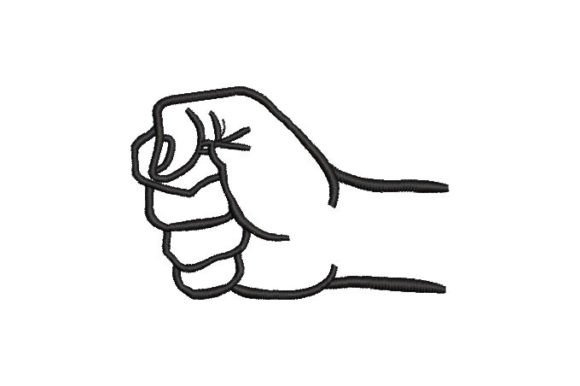
Hand in Fist Embroidery Designs: A Bold Craft Fair Staple
First Impressions: A Design That Demands Attention
When I first opened the file for Hand in Fist Embroidery Designs, I knew immediately this was a graphic with presence. It’s not a dainty, background-kind of motif. The name alone suggests unity, strength, solidarity—perfect for the Family category but also a broadly appealing symbol. The product description highlights that it’s “very beautiful embroidered with any type of fabric” and “professionally digitized,” and that promise feels authentic. On screen, the design reads clearly: a fist, perhaps holding something or formed in a gesture of support, that translates well into a striking embroidered statement. At a craft fair, you need pieces that make people pause mid-step. This embroidery file has that magnetic quality, especially when sized generously on a tote bag or an apron.
For handmade sellers and Etsy shop owners, visual impact is everything. A design that’s too complex or muddled can confuse customers at a glance. Hand in Fist Embroidery Designs cuts through the noise with a bold silhouette. It’s direct, almost symbolic, which means it communicates instantly. That’s a huge advantage when you’re vying for attention in a busy market aisle. I could already picture it on a deep charcoal kitchen towel, the thread count crisp and unapologetic.
Where This Design Shines in a Craft Fair Booth
In my years of stocking a booth, I’ve learned that some designs are chameleons—they work on everything—and some need a specific product to truly sing. Hand in Fist Embroidery Designs sits in the sweet spot. It’s adaptable but really comes alive on items that offer a decent embroidery area. Let’s walk through the product lineup I’d test for a weekend market.
Tote Bags and Market Bags: The Ultimate Canvas
A large, sturdy canvas tote bag is the perfect home for this machine embroidery design. The flat surface and minimal seam interference mean you can position the fist prominently in the center without worrying about curved surfaces or awkward hooping. I’d recommend a hoop size of at least 5x7 inches to give the design room to breathe. On a natural cotton tote, the contrast of dark thread against a light background makes the fist pop. This is the kind of craft fair product that sells itself—a customer walks by, sees the bold embroidery, and immediately connects it to a cause, a family motto, or a personal mantra. The design assets here are pure emotion, and that’s what moves handmade product off the table.
Aprons and Kitchen Towels: Functional and Heartfelt
An apron embroidery featuring Hand in Fist Embroidery Designs becomes a statement in the kitchen, whether it’s for a family reunion, a fundraiser, or a gift. I’d place it on the chest or the bib area, slightly offset to avoid the center crease. For tea towel embroidery, the design works beautifully as a focal point, especially when paired with a simple border or a complementary text. The trick here is to avoid terry cloth or heavily textured fabrics unless you’re using a heavy-duty stabilizer; the design’s clean lines are better served on flat-weave cotton or linen. As a small shop product, these embroidered towels have a premium handmade feel that justifies a higher price point.
Embroidered Patches and Small Pouches: Impulse Buys
While Hand in Fist Embroidery Designs begs to be seen large, I wouldn’t overlook its potential as an embroidered patch. If you scale it down to fit on a small zipper pouch or a fabric pouch, the simpler lines hold up well—provided you check the stitch density. Patches sell quickly at craft fairs because they’re an affordable entry point. They’re also easy to produce in batches. I’d stitch the design on felt or twill, then finish the edges with a satin stitch or a merrow border. The result is a versatile, giftable small item that appeals to younger buyers and pin collectors.
Caps and Apparel: Wearable Support
Embroidering on a cap is always a test of a design’s adaptability. The curved surface can distort lettering or fine details. Hand in Fist Embroidery Designs, with its bold, simple shape, is actually a strong candidate for cap embroidery. I’d position it on the front panels, using a cap hoop and a heavy cutaway stabilizer. Avoid placing it on the very side seams, and be mindful of the center seam if the cap has one. For a boutique maker, this design on a dad hat or a beanie taps into the casual, streetwear vibe that’s popular at markets right now. The fist motif feels modern, empowering, and easy to wear.
The Power of a Strong Visual Statement
What makes Hand in Fist Embroidery Designs so effective for a craft fair booth is its ability to create an emotional hook. It’s not just a pretty picture; it’s a symbol. Customers don’t just see a fist—they feel a story. That means higher engagement at your display. When someone picks up a tote bag design with this graphic, they’re already attaching meaning to it. That perceived value lifts the handmade product out of the generic and into the memorable. For an Etsy seller, the same thread colors and bold silhouette translate powerfully in listing photos. A printable mockup featuring this design on a neutral tote makes the digital embroidery file look instantly sellable.
Production Considerations: From Hoop to Finished Product
As much as I love the design, I always approach a new embroidery file with a maker’s eye. Here’s what I’d check before committing to a full craft fair production run.
Stitch Density and Fabric Choice
The description says the design was professionally digitized, which usually means the stitch density is optimized for clean, crisp results. However, I’d still run a test stitch on scrap fabric. A design with a fist often has areas of solid fill that can become dense. On lightweight fabrics, that density can cause puckering, so I’d use a medium-weight cutaway stabilizer and a topping on napped fabrics. For kitchen towels, a wash-away topping keeps the stitches from sinking into the towel loops. I’d also test on dark fabric—if the fist is outlined in a light color, any gaps in the fill will be glaring.
Sizing and Hoop Placement
Always confirm the maximum hoop size required by the file before you commit. Some designs come in multiple sizes, which is a huge plus. If the design has tiny details or small lettering, I’d be cautious about shrinking it below the recommended dimensions. At a smaller size, the fist might lose the clarity that makes it so powerful. For a cap or a patch, I’d test the smallest version first on a scrap of the actual fabric. The goal is to maintain that “at a glance” readability that works so well in a booth.
Thread Colors and Contrast
One of the joys of machine embroidery is playing with thread colors. Hand in Fist Embroidery Designs can be stitched in a single bold color for a minimalist look, or in two to three shades to add depth. I’d avoid low-contrast combinations on busy fabrics. For a rustic, farmhouse vibe, think oatmeal linen with a deep cranberry or forest green thread. For a modern, edgy feel, black on white or neon on a dark background catches the eye. The design’s versatility across fabric types means you can create a whole collection of coordinating handmade products with just a few thread changes.
Photographing Hand in Fist Embroidery Designs for Etsy and Social Media
A finished product is only as good as its online listing. For Etsy sellers and small shop owners, crisp photos are non-negotiable. Hand in Fist Embroidery Designs photographs beautifully because its strong lines create natural contrast. I’d set up a simple flat lay with the embroidered tote bag, a few coordinating props, and natural light. The design’s bold silhouette means it doesn’t get lost in a busy background. A printable mockup can also help you create a polished listing image before you even hoop the first piece. Just be sure the mockup accurately reflects the embroidery file’s scale and stitch angles.
Final Thoughts: Is This Design Worth Adding to Your Booth?
After a thorough evaluation, I’d absolutely bring Hand in Fist Embroidery Designs into my craft fair product lineup. It’s a design that works hard. It’s meaningful, visually arresting, and flexible enough to stretch across tote bags, aprons, patches, caps, and home decor. The hand in fist motif resonates with the Family category perfectly, but it also crosses over into themes of resilience, support, and community—all sentiments that sell well in the handmade market.
For the creative entrepreneur ready to produce, here are my final practical notes:
- Always test the digital embroidery file on the exact fabric and stabilizer you plan to use for the finished product.
- Check the stitch density on a scrap piece first. If the design feels too heavy, you may need to adjust your stabilizer or fabric choice.
- Confirm the hoop size needed for each version. Don’t guess; measure the design area before loading the embroidery file.
- Create at least one real threaded mockup—not just a digital preview—to see how the thread colors interact with the fabric texture.
- Review the commercial embroidery license that comes with the design assets. If you plan to sell finished products at craft fairs, a standard license may suffice, but always verify.
- Batch your production for efficiency. Once you nail the settings, run multiple tote bags or towels in one sitting to keep your small shop product stocked.
- For Etsy sellers, use a printable mockup to style your listing, but include at least one photo of the actual handmade product to build buyer trust.
Hand in Fist Embroidery Designs delivers on its promise of being a beautiful, professionally digitized file that works across many fabric types. It’s the kind of machine embroidery design that elevates a simple tea towel or tote bag into a statement piece. At a bustling craft fair, that’s exactly the edge you need to turn a browser into a buyer. I’ll be adding this one to my booth collection, and I’d recommend any embroidery business owner do the same.