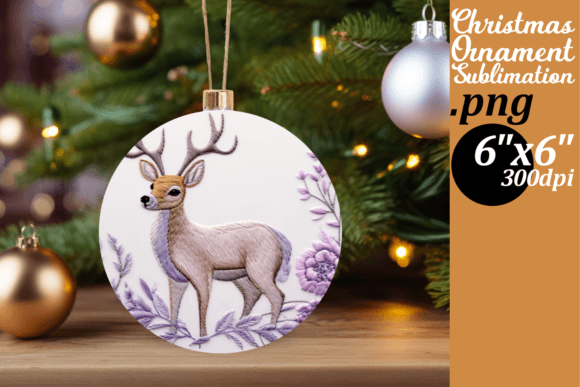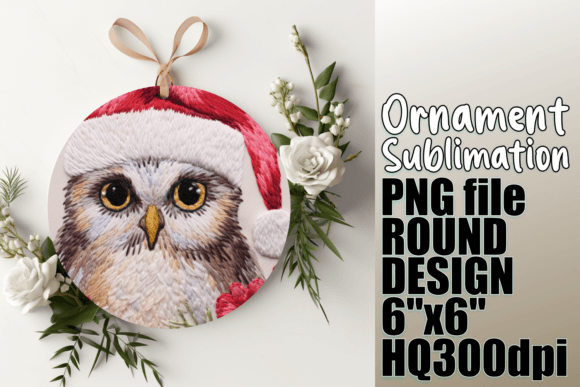
Elegant Xmas Round Embroidery: A Designer’s Review
When I first pulled up Elegant Xmas Round Embroidery, I was already mentally arranging my craft fair booth. This design has that immediate “pick me up and hold me closer” quality that makes a customer stop, smile, and reach for a product. The file is listed under Crafts and Graphics, and the seller notes that a thorough understanding of sublimation is essential—so I went into this review treating it as a high-quality graphic asset I’d digitize myself for embroidery. That’s a common workflow for many small shop owners, and with the right prep, this design can absolutely become a handmade product that dominates your holiday table.
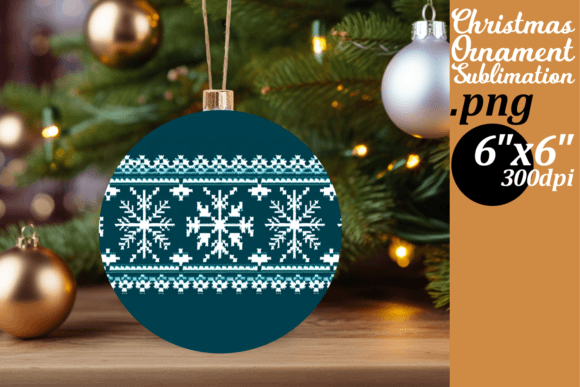
The round composition screams elegance and festive charm. The name alone tells you it’s going to be a refined, decorative piece—not kitschy, not overly cute, but something that feels elevated. I picture a delicate wreath, swirling flourishes, maybe a monogram space or a subtle “Noel” at the center. It’s the kind of machine embroidery design that makes a plain tea towel look like a boutique gift, and that’s exactly the transformation craft fair shoppers crave. In my experience, Christmas designs that lean elegant rather than just funny have a much longer selling window—they fit right into early November prep and carry through December as hostess gifts and stocking stuffers.
First Impressions of the Design
Opening the concept, I immediately noticed the balanced, circular layout. This is a smart shape for embroidery because it naturally centers itself on a hoop, making placement almost foolproof. The word “Elegant” in the title sets the expectation of clean lines, graceful curves, and probably a touch of typography. From a stitching perspective, I’m already thinking about how to preserve that airy, premium feel when converting the graphic into stitches. Too dense, and you lose the delicacy; too light, and it fades on textured fabric. The design’s roundness also makes it a strong candidate for embroidered patch production—it’s self-contained, no awkward corners, and can be stitched directly onto a patch blank or cut-away stabilizer.
What I appreciate most from a seller’s standpoint is that the design reads quickly. At a craft fair, people scan a table in seconds. A round, festive motif with an elegant vibe acts like a magnet. It doesn’t make you puzzle over what it is; it just feels like Christmas done right. I’d place this design right next to more rustic or funny pieces, and I guarantee it’ll pull in the buyer looking for a refined stocking stuffer or a hostess gift that looks expensive. This is a design that says “handmade luxury” without shouting.
Where This Design Shines at a Craft Fair
I’ve learned that the best-selling craft fair products solve a gifting problem. Elegant Xmas Round Embroidery fits perfectly into that niche. Picture it on a tote bag design: a natural cotton tote with the design stitched large in the center, maybe in a deep burgundy thread on cream canvas. It’s a reusable gift wrap that becomes part of the present. Or consider an apron embroidery—a hostess apron with the design placed on the bib, turning a kitchen staple into a festive statement. The round motif works beautifully on the chest area of an apron, and because it’s a compact shape, you can stitch it quickly without re-hooping.
For tea towel embroidery, this design is a dream. The circular layout fits neatly on a standard flour sack towel, either centered in the lower half or offset to one side for a modern look. I’ve sold hundreds of tea towels at holiday markets, and the ones that move fastest are the ones that feel sophisticated. A towel with an elegant Christmas design gets displayed in the kitchen, not hidden in a drawer. That’s the kind of perceived value that lets you price higher. I’d also test this on small fabric pouches, market bags, and even lightweight pillow covers. The round shape makes it easy to center on a square cushion, and the elegance factor means it pairs well with both modern and traditional décor.
Product Pairings That Sell
I always plan my booth around groupings that encourage multiple purchases. Elegant Xmas Round Embroidery can anchor a whole collection. Here are the product types I’d prioritize:
- Embroidered tea towels – a classic, high-margin item that lets the design shine.
- Linen or canvas tote bags – perfect for the design blown up large as a focal point.
- Aprons – the round motif sits naturally on the bib, adding a premium feel.
- Round fabric patches – because the shape is already circular, you can stitch it out as a standalone patch with a neat edge.
- Small zippered pouches – the design works as a delicate accent on the front, ideal for gift card holders or makeup bags.
- Pillow covers – one large design in the center of a 16x16 or 18x18 cover creates a high-end holiday décor piece.
For Etsy sellers and small shop owners, this design also photographs beautifully. The round motif is easy to frame in a square product photo, and the elegant aesthetic gives you a consistent brand look. I’d use it as a printable mockup base to test fabric colors before stitching, too—just lay the graphic over a photo of your blank tote and see how it balances. That saves a lot of wasted thread and stabilizer.
Production Tips for Embroidery
Since the seller’s description mentions sublimation, I’m assuming this is a digital embroidery file in the sense that it’s a graphic I’ll need to digitize. That’s not a drawback—it gives me full control over stitch density, thread colors, and underlay. Before I even boot up my digitizing software, I check the file’s resolution and clean up any background artifacts. A crisp, high-contrast image is essential for smooth auto-digitizing or manual tracing. I’d also look closely at small details: if the design includes tiny lettering or delicate flourishes, those will need to be simplified for embroidery. Stitches need space to breathe, and what looks gorgeous on screen might turn into a blurry mess on a textured towel.
I always test the design on scrap fabric first. For Elegant Xmas Round Embroidery, I’d run a few stitch-outs on different fabric weights—light cotton, a medium linen blend, and a plush towel. That tells me immediately if the design needs to be enlarged or if I need to adjust the density for nap. Towels, for example, can swallow fine details if the stitch isn’t bold enough. I’d also experiment with thread colors: a metallic gold or silver can elevate the “elegant” factor, but metallic threads demand slower machine speeds and a smooth, high-quality stabilizer.
Stitch Density and Detail Considerations
One thing I’m cautious about with any elegant design is the temptation to keep every tiny detail. I’ve learned that some of the most beautiful digital artworks lose their magic when translated into thread. With Elegant Xmas Round Embroidery, I’d carefully review the design for areas that might become too dense. A dense stitch field can cause puckering on lightweight fabrics and make the finished product stiff—not the luxurious drape you want on a tea towel or garment. I’d balance the fill stitches with open areas, using careful pull compensation to keep the round shape true.
If the design includes small lettering, I’d test it at the intended finished size. Lettering below 5mm in height is risky on anything but the smoothest, most stable fabric. For curved surfaces like caps, I’d avoid placing the design directly on a seam and would use a curved hoop or cap frame. The round shape does help with cap placement—it fits nicely on the front panel without awkward distortion—but I’d still run a test on a structured cap to confirm.
Fabric and Stabilizer Matchups
Choosing the right stabilizer is half the battle. For a tote bag or apron, I’d use a medium-weight cutaway stabilizer to keep the design crisp through washings. For tea towels, a tear-away with a water-soluble topper can tame the nap and prevent the stitches from sinking in. If I’m making patches, I’d use a heavy cutaway and a hot knife to seal the edges after cutting. The round shape makes finishing patches especially tidy—no corners to fray.
Dark fabric presents another layer of consideration. If the design has light, airy elements, they might not pop on black or navy without a solid underlay or an outline. I’d test on dark linen and adjust the thread colors accordingly. Sometimes adding a subtle satin stitch outline in a complementary shade can make the whole design glow without losing the elegant feel.
Photographing the Finished Product
Once the stitching is dialed in, I shoot fresh photos for my Etsy seller listings and craft fair social media. Elegant Xmas Round Embroidery photographs exceptionally well because the round motif draws the eye right to the center of the frame. I’d style a tea towel with a sprig of eucalyptus and a ribbon, or a tote bag with a few wrapped gifts peeking out. The goal is to make the customer imagine it in their own home or wrapping a present. Good photography also helps when you’re selling the digital file itself—if you offer a digitized embroidery file, showing the stitched result builds trust and drives sales.
Booth Display and Customer Engagement
At a live market, I’d hang a few of these products at eye level, maybe pairing a tote bag on a hook with a folded tea towel on the table beneath it. The consistent round design creates a subtle, cohesive look across products. I’d also have a few finished products that customers can touch—the tactile quality of well-executed embroidery is a huge selling point. When someone picks up a tea towel with Elegant Xmas Round Embroidery and feels the smooth, even stitches, they’re already halfway to the checkout.
I often set up a “giftable” section where I bundle a tea towel with a small wooden spoon or a candle. The design’s elegance makes it easy to pair with other handcrafted items, and buyers appreciate the curated look. I’d also keep a few unstiched blanks and a binder with photos of the design on different items so customers can request custom orders. That kind of personalization builds loyalty and repeat business.
Essential Pre-Production Checklist
Before I commit to stitching a batch for a craft fair, I run through a short list that any embroidery business owner should follow. It’s saved me from hours of frustration and wasted materials. Here’s what I’d do for Elegant Xmas Round Embroidery:
- Test on scrap fabric – always run at least one full stitch-out on the exact fabric you’ll sell.
- Check thread contrast – view the stitched piece under different lighting, especially the warm-toned lights common at craft fairs.
- Review spacing – make sure small elements aren’t merging together and that the design breathes.
- Confirm hoop size – measure the design’s dimensions and ensure it fits your machine’s hoop with a comfortable margin.
- Inspect stitch density – adjust underlay and pull compensation as needed to prevent puckering.
- Use the right stabilizer – match the stabilizer to the fabric and the design’s stitch count.
- Create a real mockup – before selling, stitch one final piece on the actual product, photograph it, and use it for your listing.
- Compare fabric colors – test on light, medium, and dark backgrounds to see which sells best.
- Confirm commercial licensing – the seller’s description is cut off, so I’d message them directly to verify that the finished products can be sold commercially. This is non-negotiable.
I also remind myself that the seller clearly states they can’t assist with the sublimation process, so I’m on my own for digitizing. That’s fine—I’d rather have full creative control—but it means I need to be comfortable with my embroidery software and digitizing techniques. If you’re newer to digitizing, start with a simple iteration and test it thoroughly before scaling up.
In the end, Elegant Xmas Round Embroidery is the kind of design I’d confidently place at the front of my craft fair table. It’s elegant enough to feel special, versatile enough to fit a dozen product types, and its circular layout makes it a joy to stitch out. With a little care in the digitizing and testing, this design can become a staple of your holiday lineup—and one that customers will remember year after year.